

Your organisation is a living system.
It's being managed like a machine.
If the way your team works isn't working.
If what you've tried to change isn't holding.
We help you see more of what's happening — and move.

You might recognise some of this.
Decisions pile up because no-one's sure who has the authority to make them. Meetings take up half the week but produce very little. People hold back — ideas, feedback, initiative — because the culture doesn't feel safe enough. Good people quietly disengage. You can see the potential in the team, but the way it's organised keeps getting in the way.
Maybe you've tried to address it — clearer processes, different structures, new tools. Some of it helped. And then the same patterns came back. That's not a failure of effort. It's a signal that something deeper is at work.


We've been inside these patterns — as practitioners, not just observers.
Thirty years of working with teams and organisations has taught us that the first thing that looks like the problem is rarely the whole picture, and that the dynamics that matter most are usually the ones no one is talking about.
We've been inside these patterns — as practitioners, not just observers.
Thirty years of working with teams and organisations has taught us that the first thing that looks like the problem is rarely the whole picture, and that the dynamics that matter most are usually the ones no one is talking about.
So why does this keep happening?
The villain isn't bad management or the wrong people. It's an inherited way of thinking about organisations — a mechanistic worldview that treats them as machines to be designed, engineered, and controlled. Diagnose the faulty part, redesign it, install the upgrade. And then be surprised when a living human system doesn't respond like a machine being repaired.
It took us a long time to see how deeply this operates — in the language we use about organisations, in how we structure change, even in our own practice. It's why so many well-intentioned change efforts improve things for a while — and then the old patterns quietly reassert themselves.

A different starting point
What makes our approach different starts with what we don't do. We don't treat the organisation as a machine with a new feature to be installed. Change that's imposed or designed from the outside — however sophisticated the design — tends to hold only as long as someone is maintaining it. Instead, we bring frameworks and practices into the system and work alongside the people there to test what fits, adapt what doesn't, and build the kind of clarity that the group owns rather than depends on. The commitment comes from within, or it doesn't hold.
The other thing that makes this different is scope. Most change approaches address one or two dimensions well: structure, or culture, or leadership development, or process. The problem isn't that those dimensions are wrong. It's that organisations are living systems where everything connects. A structural change that ignores relational dynamics won't hold. A relational intervention without clear governance unravels. A developmental shift that doesn't touch how decisions are made stays personal and never becomes organisational. We've found that working across multiple dimensions at once — governance, relational dynamics, developmental readiness, organisational lifecycle, cognitive patterns, how impact is measured — is where things start to shift in ways that last.
It's the combination of both — bringing something into the system rather than imposing it, and attending to more of what's actually at play — that we've found makes the difference.
For Leaders & Team Members
We support you at every stage — from making sense of what's not working, through practical experiments and diagnostic clarity, to developing practices the team can sustain on its own.
For Consultants/Coaches/Trainers
Our training programmes include a coach-level pathway so you can bring these practices to your own clients.
We support your team at every stage
as you adopt new ways of working.
"Something needs to change"
"I want to try things out & talk it through"
"Is this right for us?"
"We're building new practices"
"It's not sticking"
"We're ready to go deeper"
You can feel that the way your team works isn't right, but you're not sure what the alternative looks like. Start with articles and practices that name what's going on and what becomes possible.
You are experimenting with new things and you want to make sense of it — with someone who's seen these patterns before. A monthly drop-in conversation, no commitment, no agenda.
You're ready to act, but you need to know your team's specific situation before committing time, energy, and goodwill. A diagnostic and pilot that gives you clarity — or saves you from a costly false start.
Your team has committed to learning new ways of working together — distributed decision-making, effective meetings, relational depth. Structured programmes with experienced practitioner support.
You've introduced new practices but the old patterns keep reasserting. Something isn't landing — and you want to understand what's pulling things back.
The new ways of working are embedded and something bigger is emerging. You need bespoke support for the next evolution.
For Leaders & Team Members
We support you at every stage — from making sense of what's not working, through practical experiments and diagnostic clarity, to developing practices the team can sustain on its own.
For Consultants/Coaches/Trainers
Our training programmes include a coach-level pathway so you can bring these practices to your own clients.
We support every stage of the journey.
"Something needs to change"
You can feel that the way your team works isn't right, but you're not sure what the alternative looks like. Start with articles and practices that name what's going on and what becomes possible.
"I want to talk this through"
Something's happening in your team and you want to make sense of it — with someone who's seen these patterns before. A monthly drop-in conversation, no commitment, no agenda.
"Is this right for us?"
You're ready to act, but you need to know your team's specific situation before committing time, energy, and goodwill. A diagnostic and pilot that gives you clarity — or saves you from a costly false start.
"We're building new practices"
Your team has committed to learning new ways of working together — distributed decision-making, effective meetings, relational depth. Structured programmes with experienced practitioner support.
"It's not sticking"
You've introduced new practices but the old patterns keep reasserting. Something isn't landing — and you want to understand what's pulling things back.
"We're ready to go deeper"
The new ways of working are embedded and something bigger is emerging. You need bespoke support for the next evolution.
We Have Worked With





What Our Clients Say
Why this matters now
The complexity teams face isn't going away. The pace of change, the demands on collaboration, the need for people to think and decide for themselves — these are increasing.
Organisations that develop the capacity to sense and respond to what's actually happening tend to navigate this differently. Those still relying on prediction and top-down control tend to keep meeting the same problems, no matter how many times they reorganise.

What becomes possible
Clarity
Connection
Adaptability



Roles are explicit, evolving, and owned — so people know what they're responsible for, what they can decide, and how to move work forward without waiting for permission.
People bring their honest perspective, navigate differences without avoiding them, and build the kind of trust that comes from real engagement rather than enforced harmony. The relational dimension is as developed as the structural one.
their talents and creativity.
The team can sense what's changing and respond — adjusting roles, evolving practices, making decisions close to where the information lives. The system has learned to evolve itself.
What becomes possible
Clarity
Roles are explicit, evolving, and owned — so people know what they're responsible for, what they can decide, and how to move work forward without waiting for permission.
Connection
People bring their honest perspective, navigate differences without avoiding them, and build the kind of trust that comes from real engagement rather than enforced harmony. The relational dimension is as developed as the structural one.
their talents and creativity.
Adaptability
The team can sense what's changing and respond — adjusting roles, evolving practices, making decisions close to where the information lives. The system has learned to evolve itself.
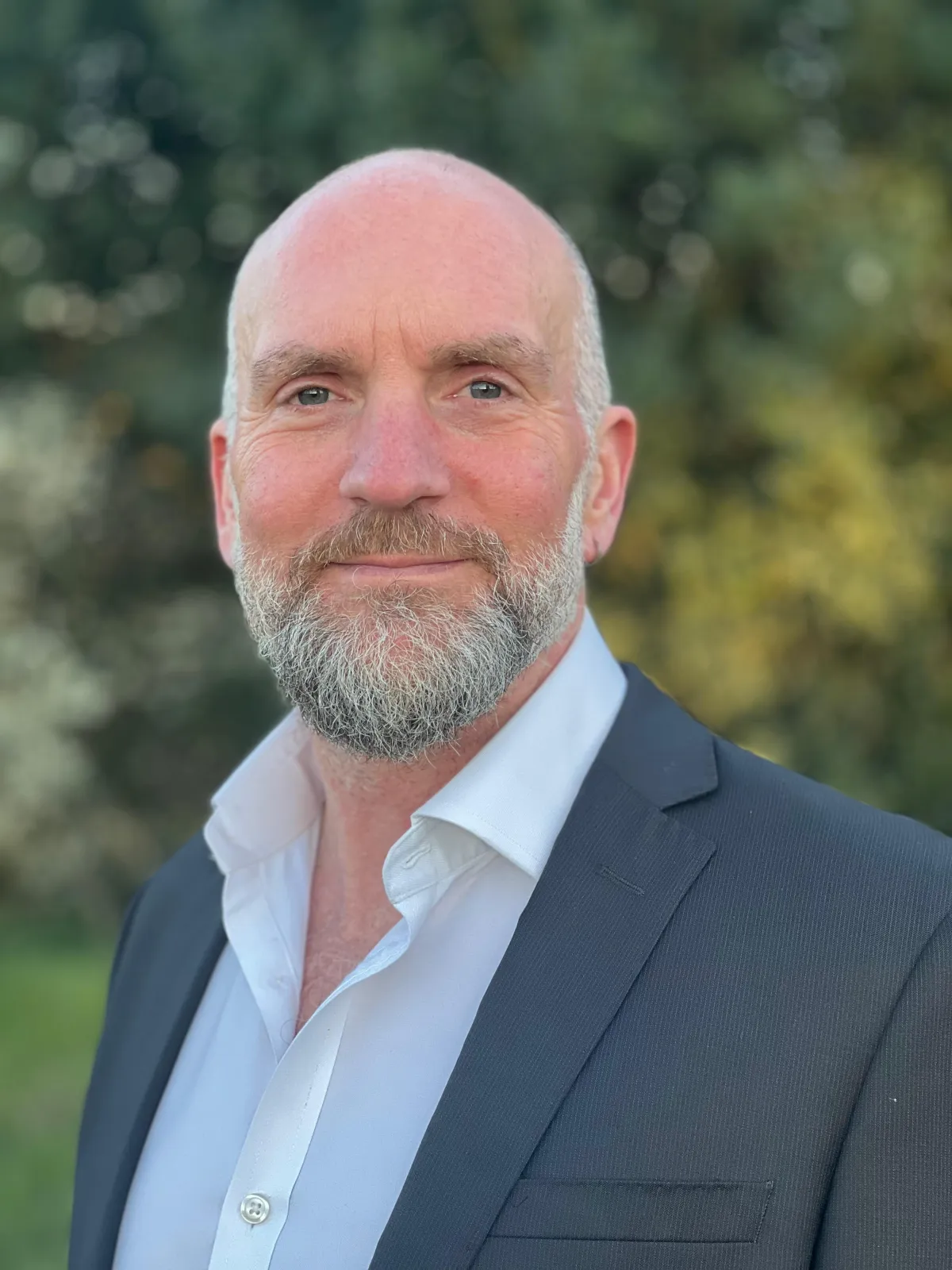
Nick Osborne — Founder
I've spent over thirty years working with teams and organisations trying to find better ways of working together. As one of seven Holacracy Master Coaches worldwide and a Certified Experience Design Consultant,
I've worked with thousands of people across organisations from startups to Shell and Ernst & Young. What I've learned is that lasting change requires more than structural redesign — it requires working with the relational dynamics, the developmental readiness, and the deeper patterns that most change efforts never touch.
That's what Evolving Organisation has evolved to do.
Nick Osborne is one of 10 Holacracy Master Coaches worldwide. This certification demonstrates the capacity to support complex organizational transformations using Holacracy practices and principles, including adapting other organizational processes to align with the paradigm shift behind self-management.
Holacracy is considered one of the gold-standard methods for creating self-managing teams and new ways of working.

Nick Osborne is a Certified X-Factor Business Consultant. This certification demonstrates expertise in designing engaging customer experiences using the Experience Formula framework—a systematic approach created by world-leading course creation expert Marisa Murgatroyd for creating transformational programmes that increase engagement, completion rates, and results.
The X-Factor is a proven methodology for designing products and services that guide customers through meaningful transformational journeys.
Nick Osborne has completed the Experience Product Masterclass for designing and leading gamified online learning programmes. This certification demonstrates expertise in using a framework of 10 core experiences that increase student engagement, completion rates, and results.
Experience Products are created by a proven methodology created by world-leading course creation expert Marisa Murgatroyd for designing transformational learning journeys.
COMPANY
WHERE ARE YOU?
© Copyright 2026. Evolving Organisation Ltd.
UK Company No. 10345682
