
#5 Why We Can’t Let Go of Control (Part 1)
How outdated assumptions about human nature sabotage the shift beyond hierarchy.
There’s a change in the air.
Listen closely, and you’ll hear it: in the frustrated columns of disillusioned conservatives, in the podcasts of authoritarian populists, and in the subtle tone shift of business commentary. What some call a “vibe shift” seems, to others, like a collective pull backwards: towards control, proclaimed certainty, and yet again a more authoritarian way of leadership.
This shift is beginning to affect the field of organisational development as well—and it hits a vulnerable spot.
After all, many well-intentioned experiments inNew Work, AgilityandSelf-Managingorganizations and teams have left people sobered, and at times even a bit cynical, wondering whether perhaps not everyone is made for the autonomy and accountability — or equipped to tolerate the level of ambiguity these new forms of collaboration require.
The very ideas that were recently celebrated as the future of work—shared leadership, psychological safety, empathy-led leadership—are now increasingly dismissed as idealistic luxuries, out of touch with the pressure to stay competitive and financially sustainable.
In times of crisis, the promises of New Work seem to falter.
Beyond Wishful Thinking
Perhaps the backlash is an opportunity in disguise: a moment to rethink some of the more one-sided narratives around New Work, Agilityand Self-Management, especially in teams and organizations that aim to move beyond hierarchy.
The past decade has brought a welcome shift: a growing focus on human needs at work—freedom, belonging, meaning, psychological safety.
But what many people experience today is a growing tension:
Expectations have risen — people want more of their emotional and psychological needs met at work.
At the same time, organisations are still struggling to meet even the basics.
The result is a sense of strain on both sides: People feel stretched, overwhelmed, emotionally thin. Many are running on empty, while diagnoses like burnout, anxiety and ADHD are on the rise.
And organizations, too, are under pressure: competing globally, adapting to AI, responding to constant change.
It’s no surprise that disillusionment is spreading. Not because the ideals were necessarily all wrong, but because real change requires more than good intentions.
Three Myths that Sabotage your Shift Beyond Hierarchy
Self-management is often introduced as a response to increasing complexity. But far too often, it’s either naively idealized or prematurely abandoned when things get messy. Expectations are high: more motivation, more innovation, more meaning. But the reality is more nuanced.
Let’s unpack three widespread misconceptions that derail self-management—and what they miss.
Myth 1: “Self-management just happens when you flatten hierarchies”
One of the most common mistakes is believing that self-management will naturally emerge once traditional hierarchies are removed. But simply cutting layers of management does not create autonomy and self-direction — it creates a void.
Self-management requires structure. It requires clear roles, accountabilities, and decision-making processes. Structural hierarchy isn’t inherently bad. In fact, it can provide orientation, coordination, and focus—especially in complex systems.
In some high-profile cases, organisations have removed several layers of middle management in an effort to become more agile. But without redesigning decision-making structures, these efforts often lead to unintended consequences: coordination becomes slower, informal hierarchies re-emerge, and many employees report feeling overwhelmed or unsupported.
Self-management without explicit decision-making structures doesn’t lead to empowerment. It leads to confusion.
This is why models like Holacracy are so valuable—not because they reject hierarchy, but because they replace traditional management with a different kind of operating system. Roles instead of job titles. Circles instead of departments. Decision rules instead of personal authority.
As early as the early 1970s, Stafford Beer developed the Viable System Model (VSM) — a cybernetic framework for organizational complexity. The model describes five interacting subsystems (or functions) that organizations need in order to remain viable: operations, coordination, control/optimization, environmental adaptation and strategy, and policy/governance. Removing hierarchy without redistributing these functions doesn’t create freedom—it creates dysfunction.
Self-management isn’t what happens when you remove control. It’s what happens when you intentionally redesign the system to distribute formal authority differently, to let go of the illusion that anyone can stay “in control” in a complex, fast-changing world, and to replace it with new assumptions and shared pathways for navigating change.
Myth 2: "Self-Management is Chaotic & Inefficient"
When self-management is poorly implemented, it often looks messy: unclear roles, endless meetings, unspoken tensions, and accountability that’s scattered at best, and at worst, duplicated, missing, or landing in the wrong places.
The problem isn’t the concept—it’s the absence of structure.
Sociologist Stefan Kühl notes that small teams often manage themselves intuitively. But as systems grow, formal rules and agreements become essential. Without them, organisations fall into informal power games, passive resistance, or paralyzing ambiguity.
Too many organisations still view themselves as machines. In that worldview, anything inefficient is seen as broken. But self-management isn’t about frictionless perfection—it’s about creating learning conditions within complexity.
When people resist or struggle, it’s not proof that self-management doesn’t work. It’s a signal that the system needs clearer agreements and shared orientation.
Myth 3: " Self-Management is a trendy idea with no real substance"
When teams struggle, it’s easy to blame the concept itself. “It’s too idealistic,” people say. “It doesn’t work in the real world.”
But this critique often misses the point. Self-managementwithout structureis not self-management. Trust and openness are not enough if they aren’t paired with clearly defined roles, decision domains, and shared commitments.
The key is not more freedom, butfreedom with form.
Done well, self-management is the foundation for adaptive, learning organizations. It requirestransparent agreements, collective reflection, and distributed decision-making power—not vague values or inspirational posters.
Self-management isn’t a rejection of structure. It’s a reconfiguration of power and our relationship to control.
What If We’re Still Trying to Control—Just More Nicely?
It’s easy to criticize traditional, top-down leadership.
But even in organizations that embrace New Work, agility, or self-management, subtle forms of control persist—just reframed as care, guidance, or “readiness checks.”
We say we believe in people. Yet we quietly assume they’re not quite ready to carry real responsibility. They don’t see the full picture yet. They can’t handle the pressure. They might make the wrong calls.
So we stay involved. We stay in charge. We keep the key decisions close—until they’re more experienced, more aligned, more… like us.
We call it support. But it’s still a gatekeeping move.
As Nick Osborne writes in his article How I Discovered My Inner Dictator, many of us carry an inner part that wants to control—“for good reason.” And often, that reason is built on hidden assumptions about what others can and cannot handle.
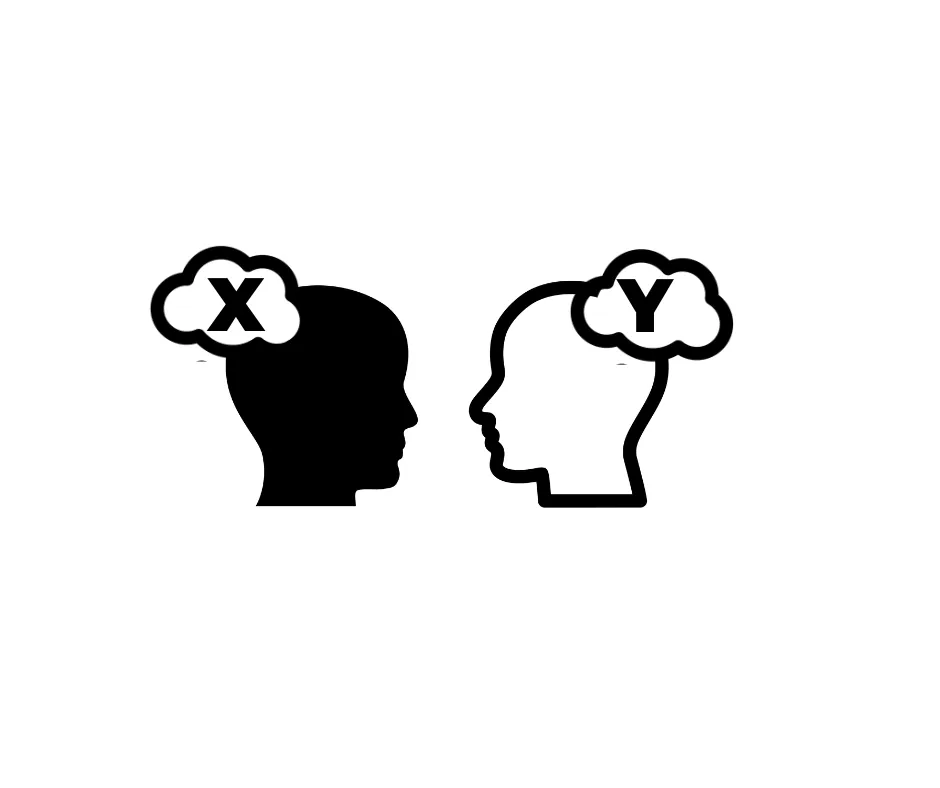
Time to Revisit Theory X and Theory Y
Back in the 1960s, psychologist Douglas McGregor described two core views of human nature in organizations:
Theory Xassumes people are lazy, avoid responsibility, and need direction.
Theory Ysees people as capable, curious, and motivated—under the right conditions.
Most progressive leaders say they believe in Theory Y. But in practice, we often act out a new version of Theory X:
Not necessarily because we think people are unwilling (although I’ve heard that argument many times, as well) — but because we’re not sure they’re able. Sometimes the story goes that they don’t have a broad enough perspective, yet. Or that they’re not used to real tension. That they still need guidance.
So we over-explain. Over-coach. Oversee.
We say we’re empowering people — but still decide what they’re ready for, what roles they can hold, and how far they can go.
We mean well.
But these beliefs quietly keep power right where it’s always been.
The Real Trap: A Self-Fulfilling Prophecy
Here’s the problem:
If you lead with this hidden assumption, you will unconsciously design systems and perpetuate relationships that confirm it.
When people hesitate, you step in.
When roles are unclear, you hold the centre.
When things get messy, you slow down structural change—because “people aren’t ready.”
And over time, a pattern sets in:
You’re the one who sees the bigger picture.
You’re the one who feels responsible.
You’re the one who speaks with clarity, while others “need to be brought along.”
So if you are in a leadership position, then your team continues to act like they can’t decide without you, even though you are trying to ‘empower them’ by telling them that they can decide without you!
Not because they’re incapable — but because the system is rigged by these assumptions to keep you in charge, even when you tried not to be.
This mirrors what Nick Osborne describes asthe risk of letting our unexamined “Inner Dictator” take the wheel—especially in moments of ambiguity, complexity, overwhelm, and uncertainty. Without awareness, our well-meaning interventions to support others may actually inadvertently re-centralize power.
Theory Y, Revisited
What if the problem isn’t people—but the way we design work, and the implicit assumption that we can control such a shift to more distributed ways of working — simply by designing it?
What if we stepped away from the idea that we can control this shift to new ways of working? We might replace it with an approach where we co-create the conditions where these new ways of working are more likely to emerge, because they are a better fit for what’s needed in these times.
What if we stopped asking whether people have the right mindset, and instead established systems that create space for and invite people to step into responsibility, ownership and leadership.
Not because people are “already ready”— many aren’t, and that’s often due to the very systems they work in. But because responsibility can’t be handed over like an object. It can’t be designed top-down, nor claimed unilaterally.
Real ownership emerges through an iterative, relational process — a kind of dance that only works when four things align:
A leader letting go,
A team member stepping up,
Structural conditions that support the shift — like transparent roles, clear boundaries, and participatory decision-making,
Relational conditions that allow for friction—and for a rare but essential capacity to emerge: the ability to speak truth to power.
This is what a new Theory Y could mean today.
The following model contrasts two implicit logics:
A well-meaning but paternalistic Theory X, and an agency-based Theory Y for complex, adaptive organisations.
Becoming aware of the assumptions that are shaping how we design collaboration is not a moral exercise.
It’s the first step in building organizations that move beyond hierarchy—not just in structure, but in how they relate to human potential and shared power.
But what exactly distinguishes a Theory Y logic from its modern Theory X counterpart?
And how do these logics shape the way we deal with complexity, development, and leadership in real organisations?
The table below offers a first sketch. In part two, we’ll dive into what this means in practice—and what kind of system design is needed to make Theory Y real.

🧪 Run this Week’s Experiment:Explore a Different Relationship to Control 🎛️
This week’s experiment involves reflecting on assumptions you make when collaborating with others in your group/team/organisation and their impact, exploring options for new and different ways of doing things, and getting feedback from others about them.
Do the Experiment Now
Next is part 2 of this 3-part article: From mindset to structure—What a Theory Y system needs to move beyond hierarchy.


